Table of contents:
S. No | Topics |
1. | WHAT is Latin Dance |
2. | Types of Latin Dance with short description |
3. | Types of Salsa dance with Images and Videos |
4. | Types of Bachata dance with Images and Videos |
5. | Types of Kizomba dance with images and videos |
What Is Latin Dance?
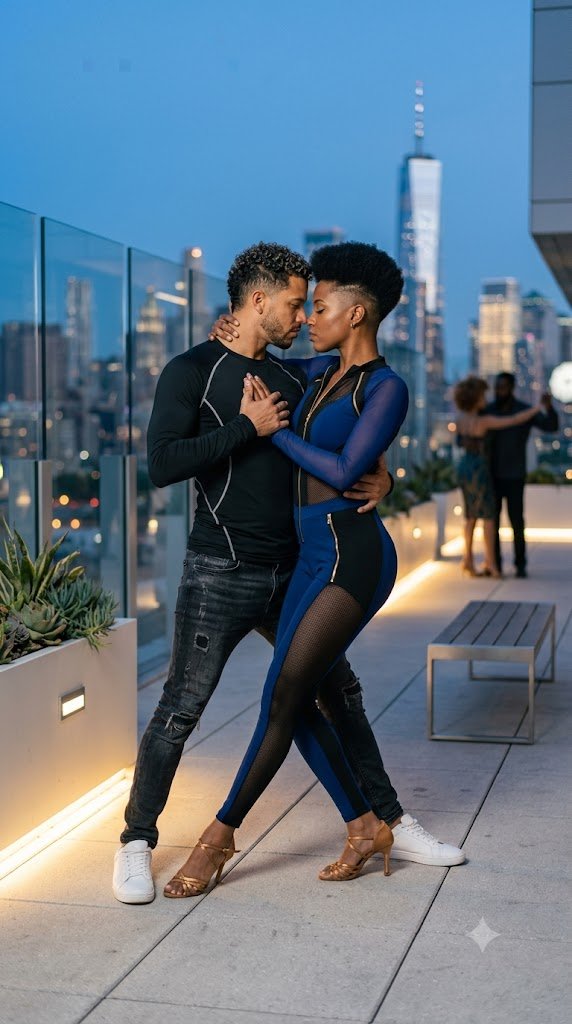
Latin dance is a lively series of partner dances that blend music, rhythm, movement, and social interaction. Some of the most popular Latin dances include Salsa, Bachata, and Kizomba, each providing its own distinct style and musical experience. Salsa has energetic footwork and exciting turns. Bachata is all about the smooth connection with your partner and expressive body movement. Kizomba has graceful, flowing steps and close musical interpretation. Learn Latin dance is fun and helps with coordination, confidence, fitness, and musicality, as well as opportunities for social dancing and a friendly dance community. Whether you are a novice or a seasoned dancer, learn new skills and feel the passion of Latin dance with fun Salsa, Bachata, and Kizomba classes.
What are Latin dance forms?
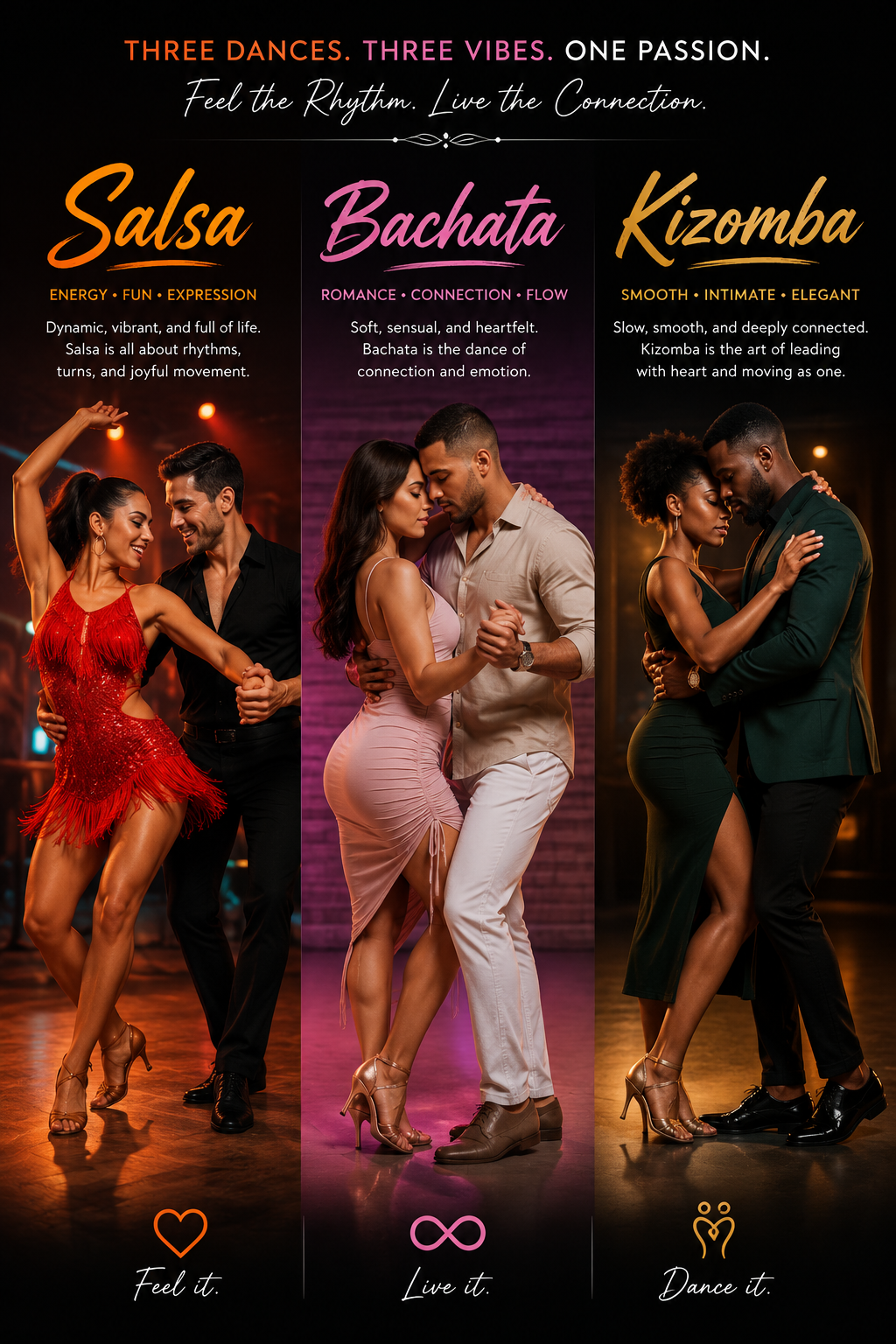
Salsa:
Salsa is a lively Latin dance that vibrates with passionate energy, involving rapid footwork and smooth partner interaction. Dancers move in quick steps, sweeping body movements, and sharp turns, all while deeply connected to the music’s rhythm. Salsa, born from the vibrant fusion of Afro-Cuban culture and Caribbean flair, has become a global phenomenon, cherished for its passion, sociability, and the magical, soul-stirring feeling it brings to every session.
Bachata:
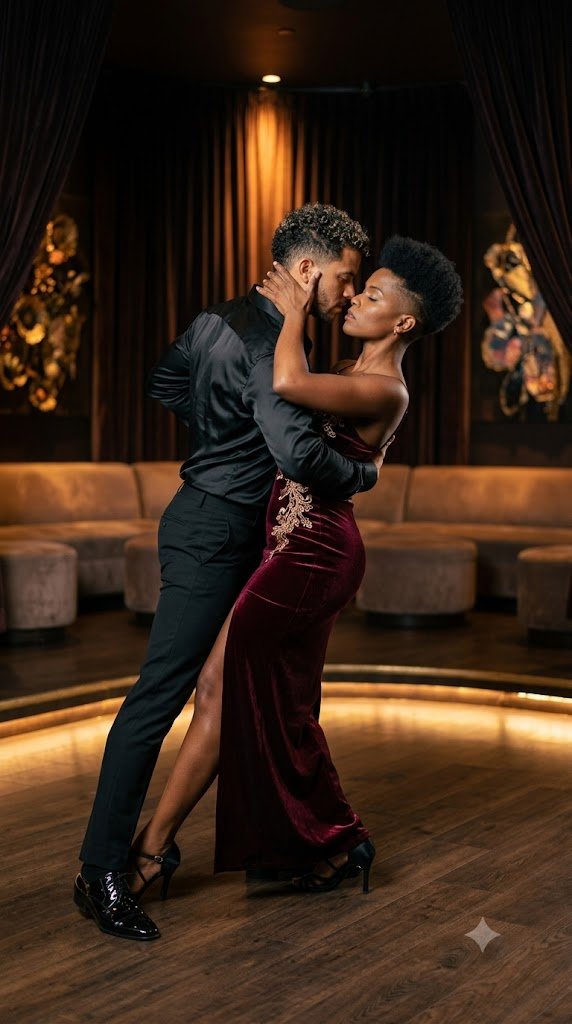
Bachata is a Latin dance that is very romantic and emotionally expressive, and it originated in the Dominican Republic, where it was a folk dance in the early 20th century. Today, it is one of the most popular social dances in the world, recognizable for its smooth style, close connection between partners, and sensual but elegant character.
Kizomba:
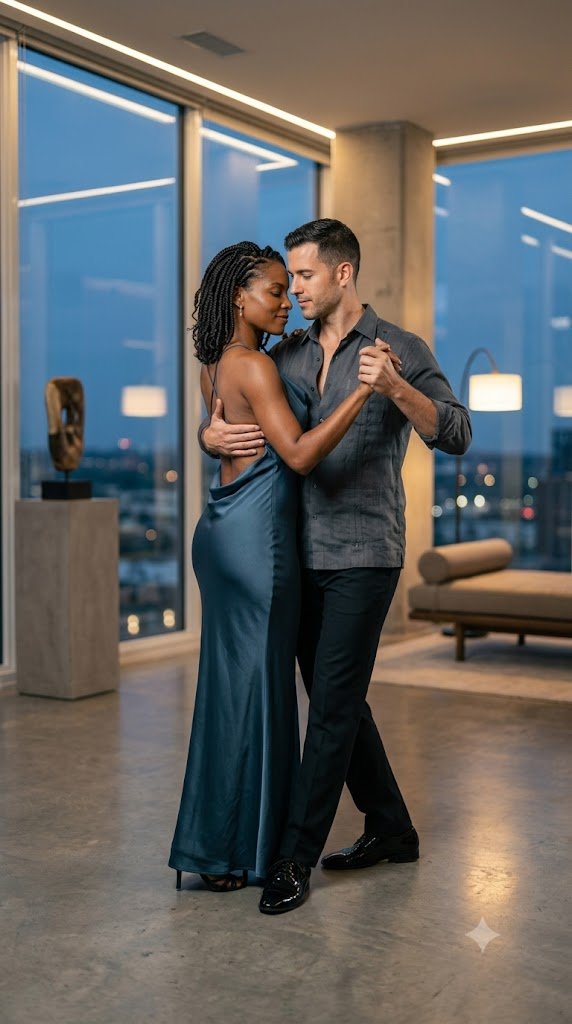
Kizomba dance is a sensual and smooth partner dance originating in Angola. Kizomba is known for its smooth, flowing movements, close connection, and elegant steps, with a focus on musicality, balance, and communication between partners to create a graceful and intimate dance experience.
What are the types of salsa?
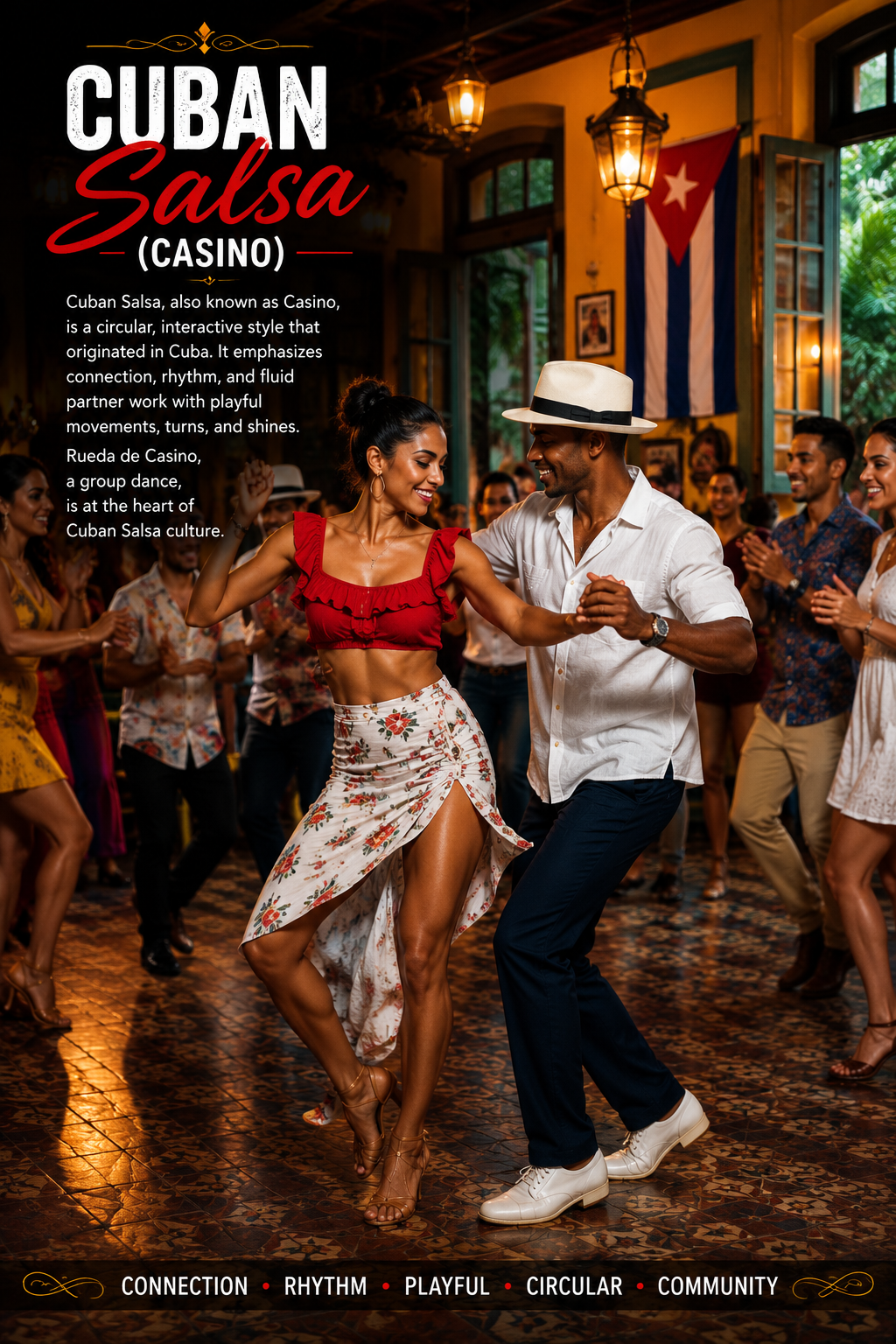
1. Cuban Salsa (Casino) — The Circular Celebration
Casino (from “casino deportivo,” a popular recreation center in Havana) is the oldest mainstream style of salsa, born in 1950s Cuba. Cuban salsa is not linear but circular, with partners changing places around a common center.
What makes it unique:
- Casino Rueda: A group dance where 4-20 couples form a circle and follow a “caller” shouting commands like “dale,” “en horas,” or “vacílala,” making a playful, social game of synchronized movement.
- No forward-back: Steps move side-to-side and around, with partners rotating all the time
- Playful energy: Hip movements are bouncing, turns are whimsical, and interactions are dance flirtations.
- Close connection: Often partners hold hands in a relaxed ‘open break’ or ‘closed embrace.’
Think of Casino as salsa’s street party—rooted in community, joy, and Cuban desenfado (carefree attitude) [self-generated].
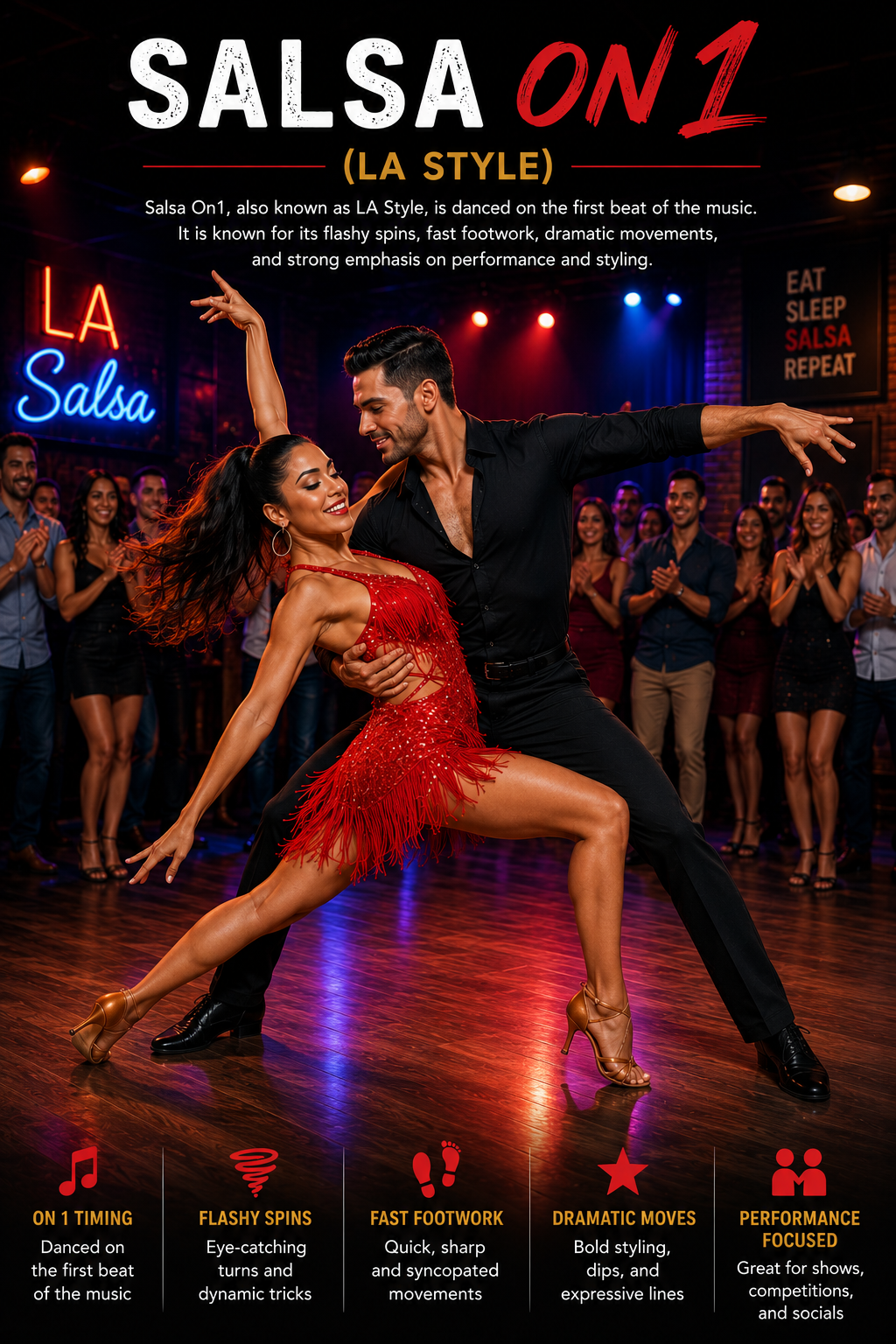
2. Salsa On1 (LA Style) — The Flashy Performer
This dramatic, stage-ready style was born in Los Angeles, the entertainment capital of the 1970s–80s. “Danced On1” means the leader’s forward step is on the 1st beat of each measure.
What makes it unique:
- Forward-back axis: Movement flows along a straight line, not a circle
- Showmanship: Flashy spins, dramatic dips, quick footwork, and theatrical arm styling
- Fast tempo: Often danced to 180–220 BPM music, demanding precision
- Performance focus: Built for competitions, nightclubs, and Hollywood films
LA Salsa On1 is salsa as spectacle—where every turn feels like a camera moment, and every partner exchange is choreographed for impact [self-generated].
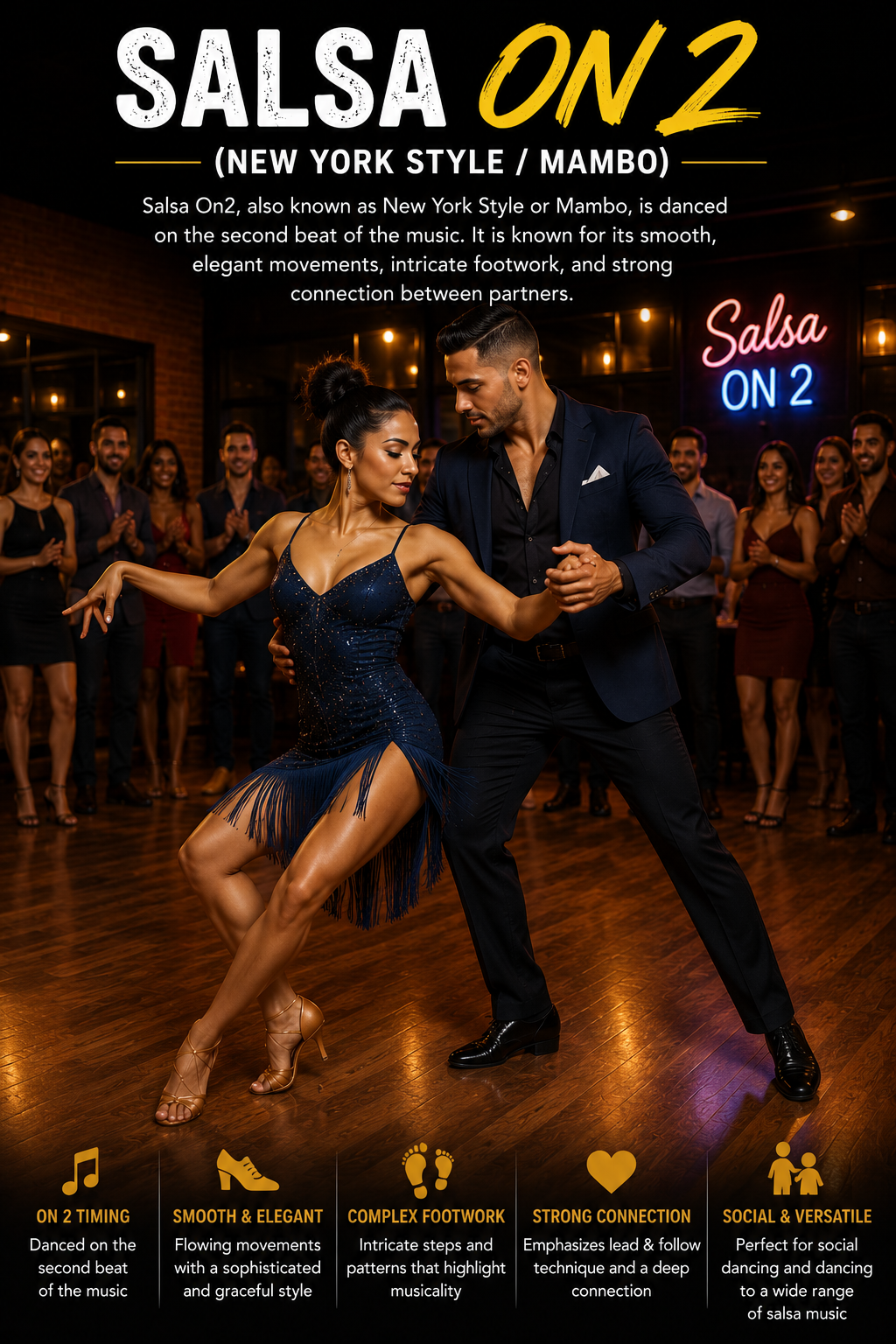
3. Salsa On2 (New York Style / Mambo) — The Elegant Sophisticate
Emerging from 1940s–50s New York (particularly the Bronx and Harlem), On2—also called “Mambo”—is danced on the second beat, with the leader stepping forward on beat 2.
What makes it unique:
- Smooth timing: The delayed step creates a slower, more fluid feel than On1
- Musicality-first: Dancers emphasize phrasing, breaking on the weak beats (2 and 6) to highlight the music’s syncopation
- Graceful movement: Less flashy than LA style; more elegant lines, controlled turns, and balletic posture
- Mambo steps: The signature “break forward on 2, back on 6” creates a swinging rhythm unique to NY salsa
NY On2 is salsa as poetry—where timing, space, and musical emotion matter more than speed or tricks (self-generated).
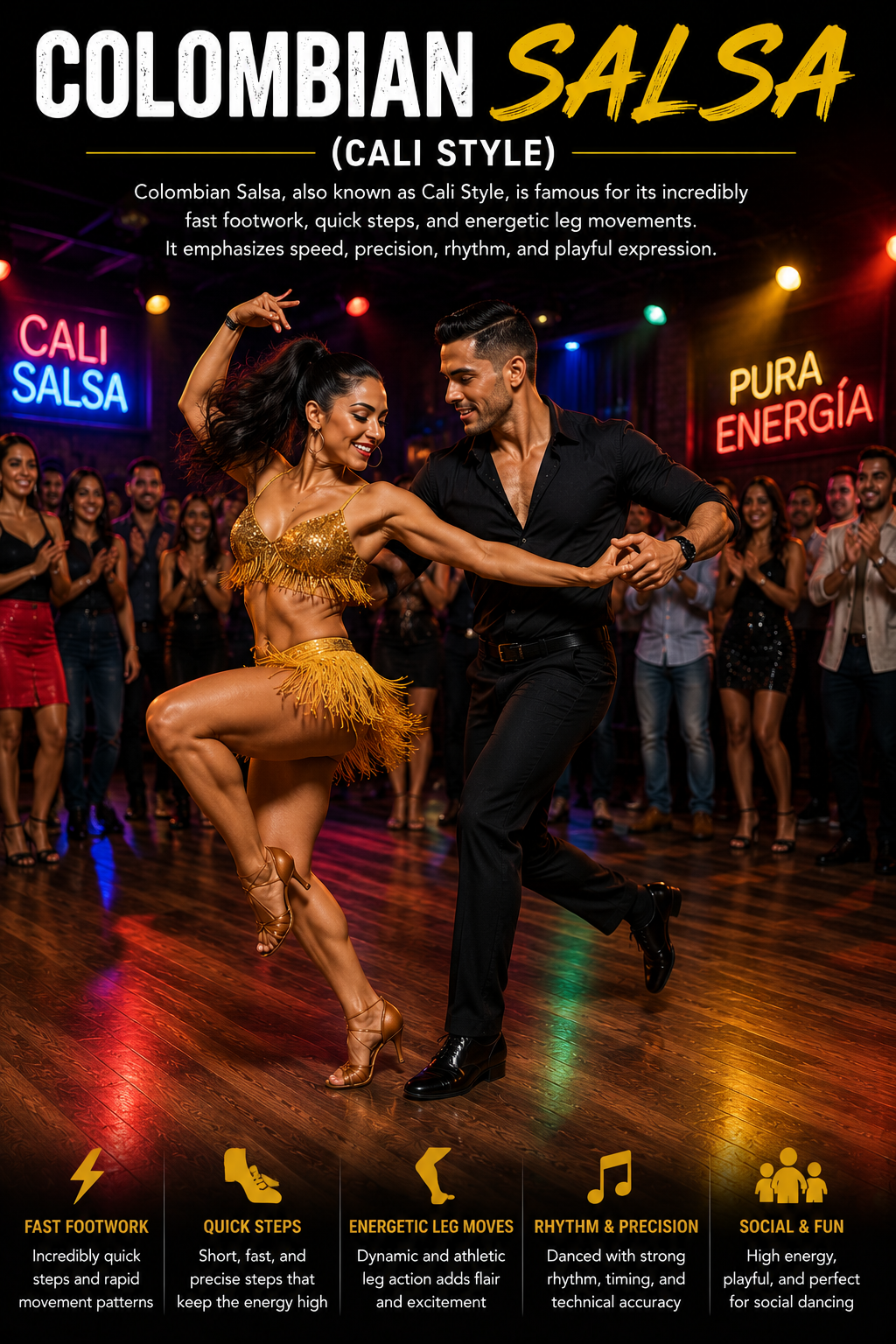
4. Colombian Salsa (Cali Style) — The Speed Specialist
From Cali, Colombia—known as “La Salsa de América” (America’s Salsa Capital)—this style is salsa at its fastest. Dancers here don’t just move quickly; they explode with rhythmic energy.
What makes it unique:
- Unmatched footwork: Steps can reach 300+ per minute, with tiny, rapid kicks and leg flicks
- No pause: Movement is continuous, never settling into slow moments
- Solo emphasis: While partner work exists, shines (solo footwork) are the star
- Rhythmic complexity: Dancers break on different beats within the same song, creating polyrhythmic layers
Colombian salsa is salsa as athletics—a dance of speed, precision, and fiery calienta (heat) that demands lightning reflexes [self-generated].
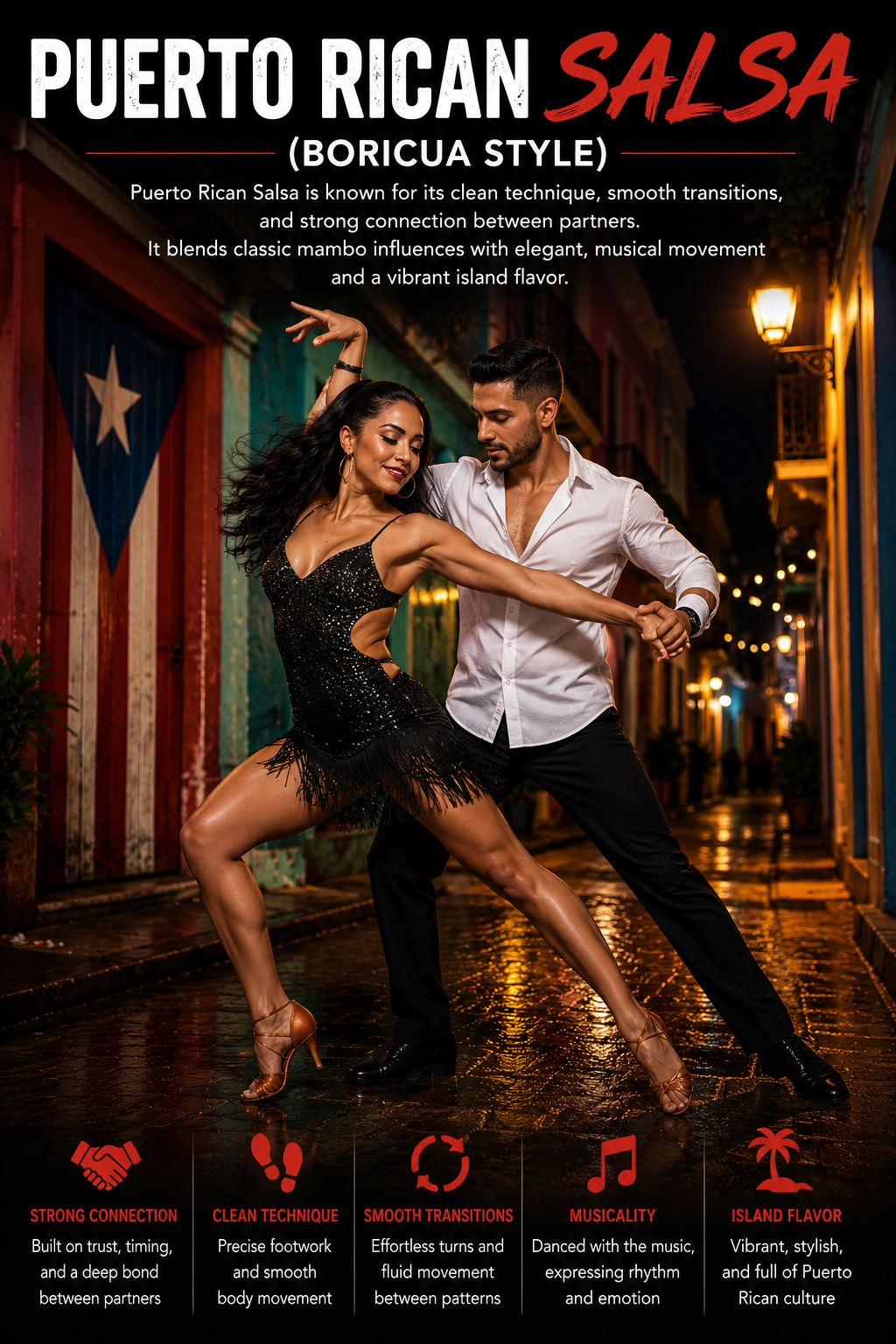
5. Puerto Rican Salsa — The Smooth Stylist
Puerto Rico’s salsa emerged from the 1960s–70s island culture, blending Cuban rhythms with American jazz influences. It’s danced on1 but with a distinctly smooth flow.
What makes it unique:
- Shines-forward: Solo footwork (shines) is elaborate and artistic, often performed before returning to partner work
- Elegant partner work: Clean, controlled turns with minimal drama
- Musical interpretation: Dancers mirror the song’s melody and lyrics, not just the beat
- Flow state: Movement feels gliding, not jumpy—like water flowing over stone
Puerto Rican salsa is salsa as artistry—where every step tells part of the song’s story (self-generated).
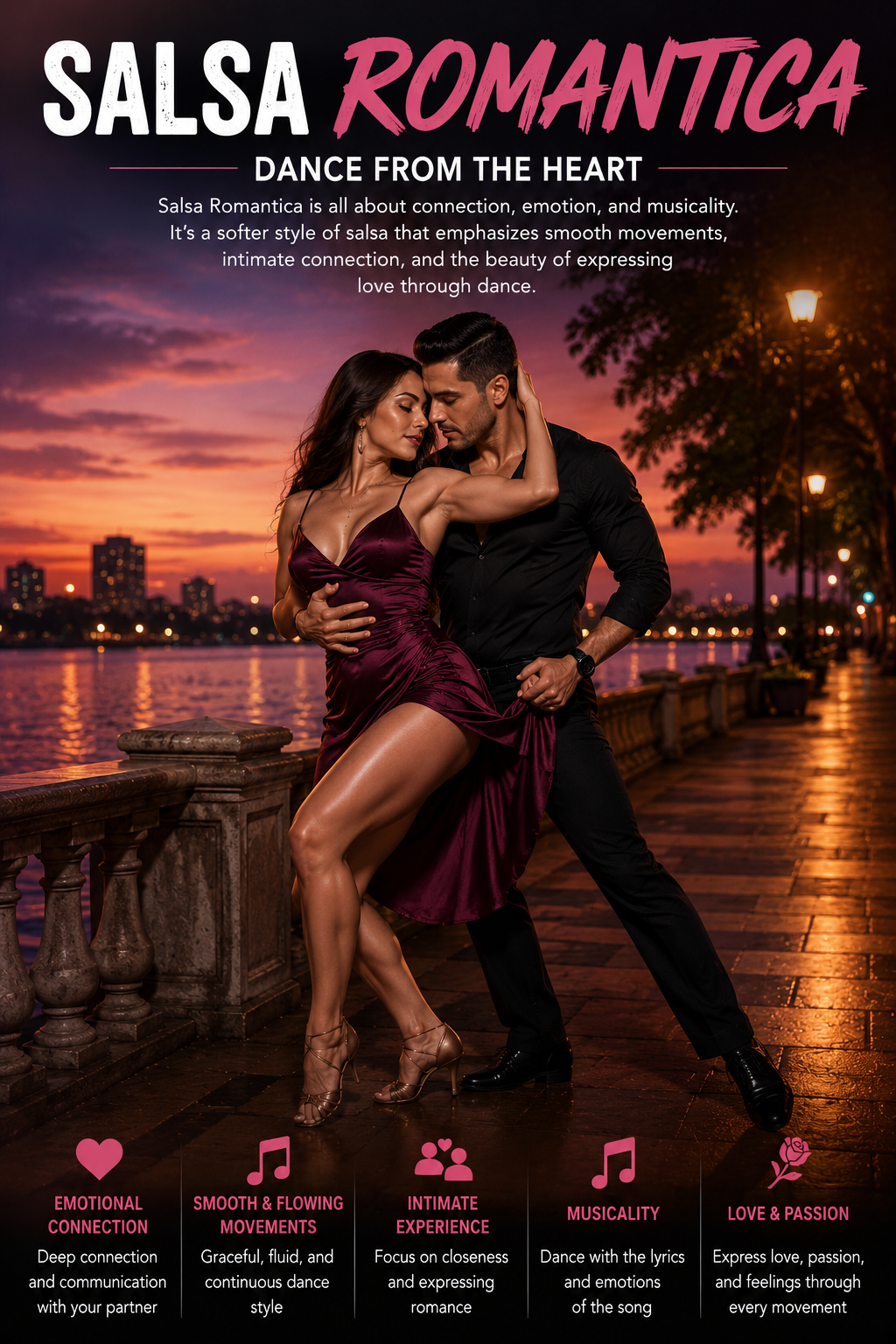
6. Salsa Romantica — The Lover’s Dance
Born in the 1980s as a response to faster, more aggressive salsa styles, Romantica (also called “Salsa Emocional”) is salsa for romance.
What makes it unique:
- Slow tempo: Danced to 140–160 BPM music, often with soft vocals and lush instrumentals
- Close embrace: Partners stay in a closed position most of the time, with minimal separation
- Soft movements: No flashy dips or fast spins—just gentle turns, smooth body rolls, and expressive hand gestures
- Emotional focus: Every movement conveys love, longing, or intimacy
Salsa Romantica is salsa as romance—a dance of tenderness, where the music whispers and the partners listen (self-generated).
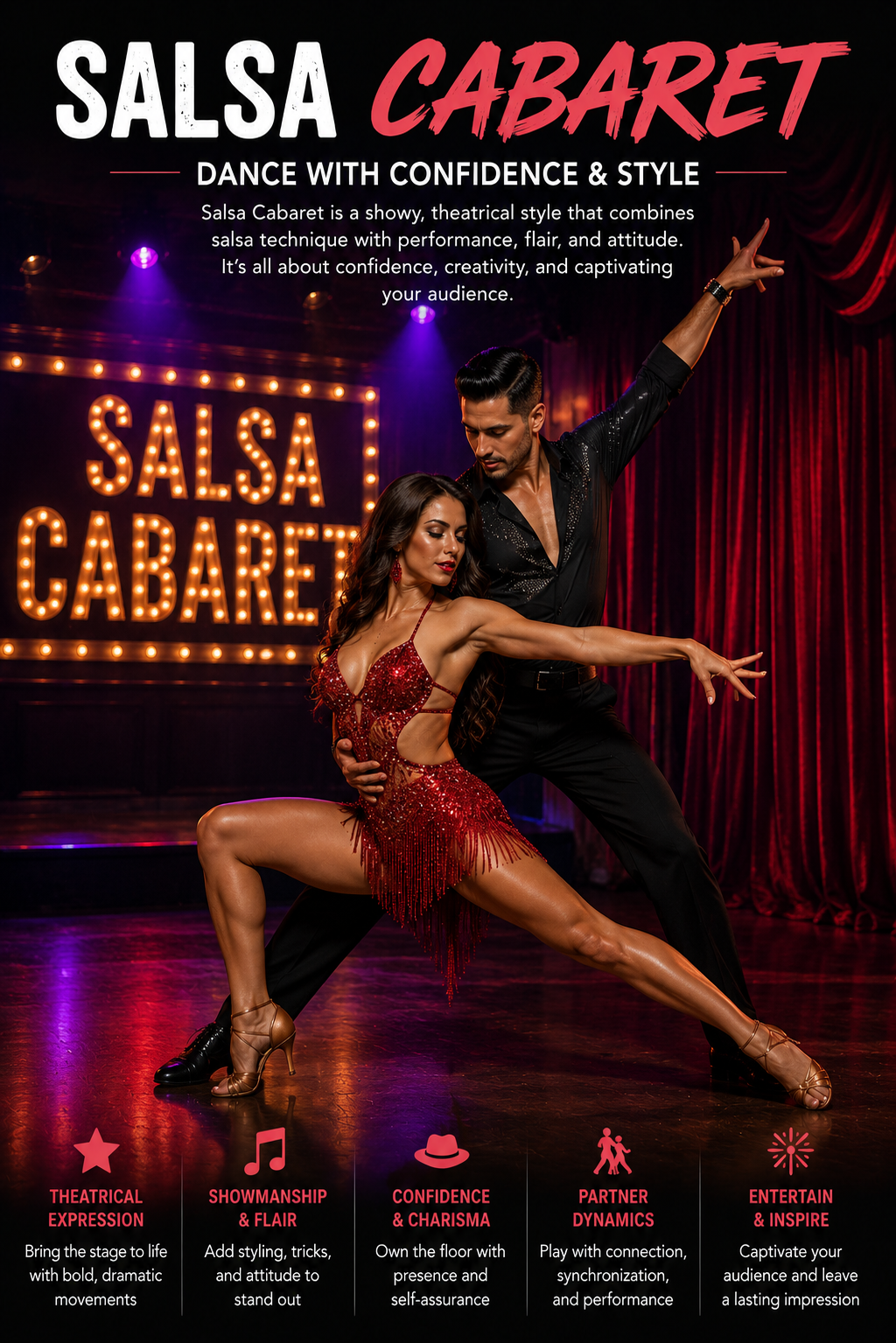
7. Salsa Cabaret — The Stage Spectacle
Cabaret is not a social dance—it’s performance salsa, designed for competitions, theater, and big-screen moments.
What makes it unique:
- Acrobatics: Includes lifts, aerial tricks, dramatic drops, and partner flips
- Choreographed: Every move is planned, not improvised
- Dramatic styling: Bold costumes, expressive facial acting, and theatrical lighting
- Extreme difficulty: Requires years of training, strength, and trust between partners
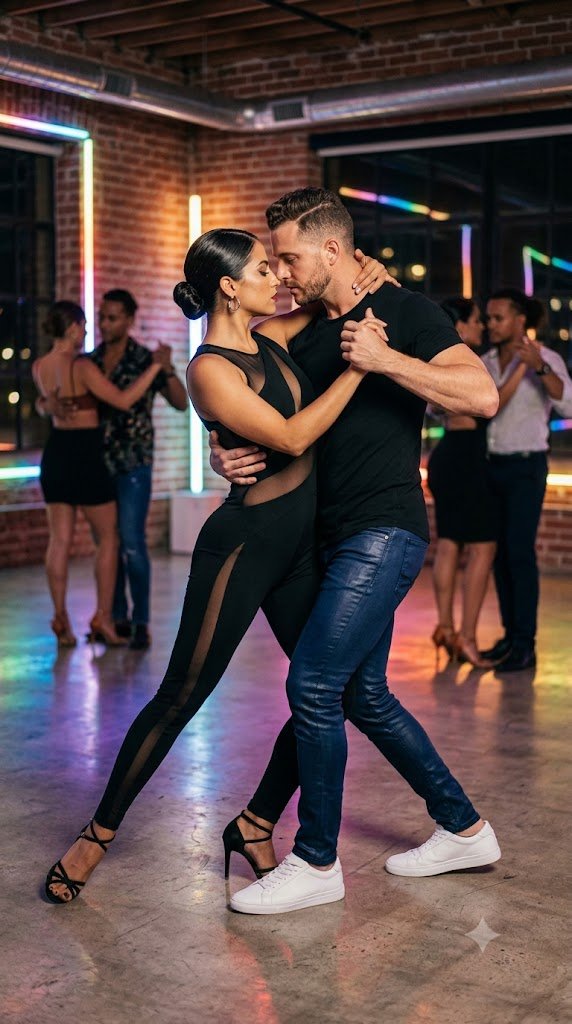
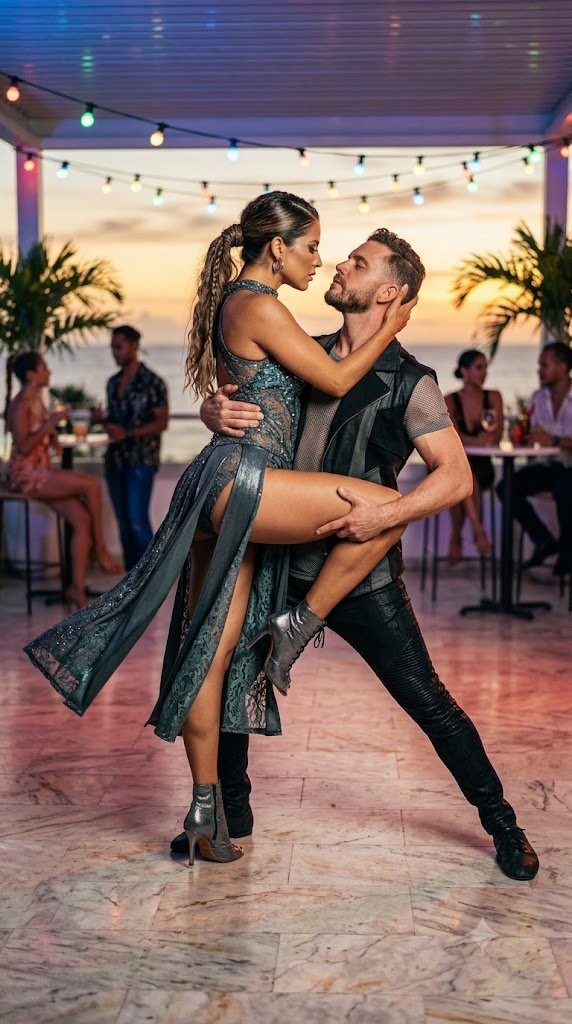
What are the types of Bachata?
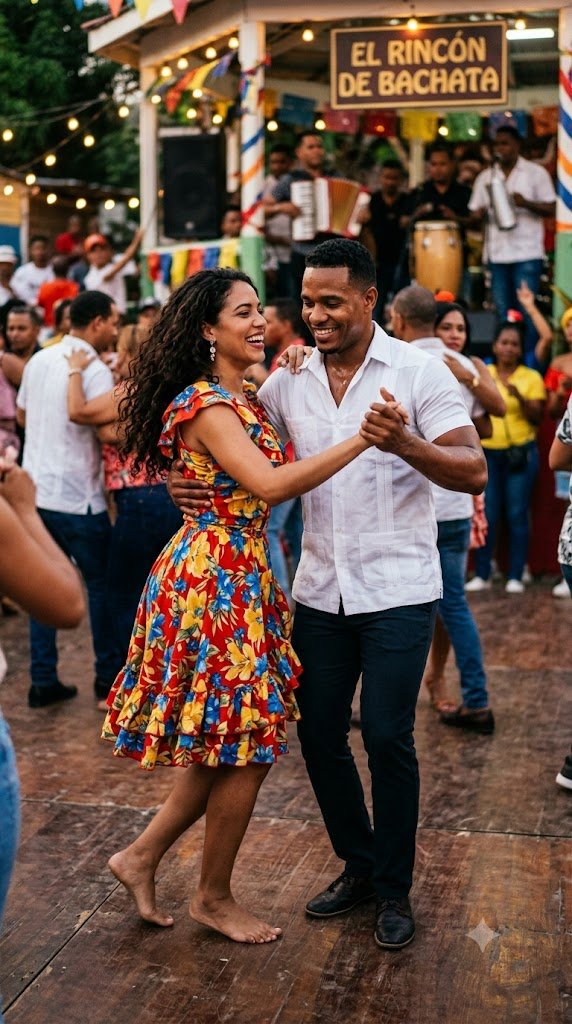
1. Traditional Bachata (Dominican Bachata)
This is the original style of Dominican Republic bachata.
- Fast and light-footed footwork
- Good interpretation of the music
- Hip movement in nature
- Concentrate on rhythm and connection
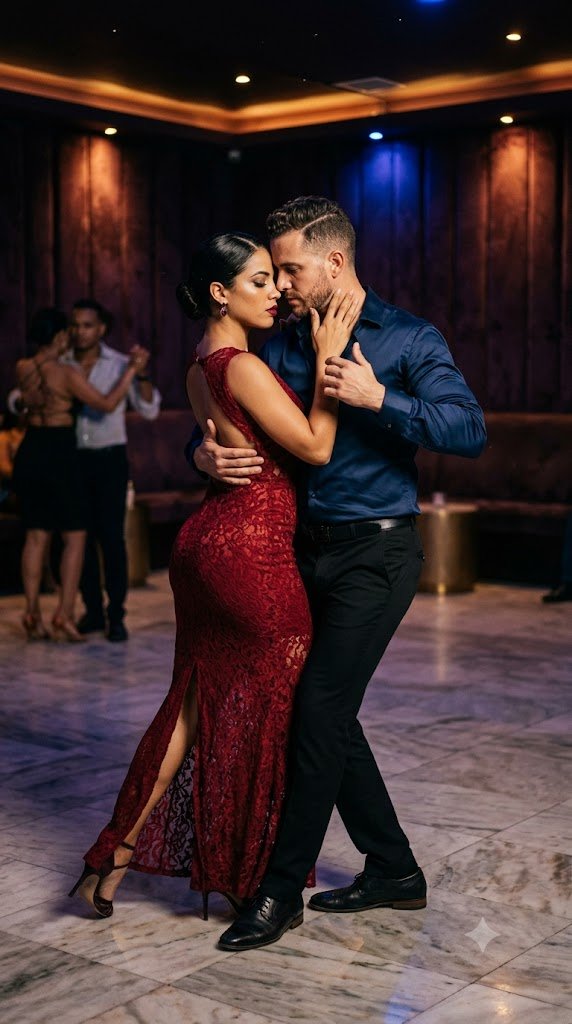
2. Sensual Bachata
A modern dance style emphasizing expression and flow that became popular worldwide.
- Fluid Body Waves and Isolation
- Close partner association
- Controlled movement and musical feeling
- Look romantic and elegant
3. Modern Bachata
A fusion style that blends traditional bachata with modern influences.
- Styling and cleaner lines.
- more and patterns
- Mix of traditional and modern techniques
- Social dance community favorite
- Bachata Fusion
4. Bachata Fusion
A creative mix of bachata with other dance styles such as salsa, tango, or contemporary dance.
- Choreography Experimental
- Unique combinations of movement
- Flexible style & interpretation
- Often in performances and shows
BachaZouk:
BachaZouk is a contemporary partner dance style that blends the musicality and footwork of Bachata with the fluid body movement, elasticity, and connection of Brazilian Zouk. This fusion creates a smooth, expressive social dance experience that emphasizes musical interpretation, body isolation, partner connection, and creative movement. Popular at Latin dance festivals and social dance events worldwide, BachaZouk offers dancers a unique way to explore both Bachata and Zouk while enjoying an elegant and versatile partner dance style.
What are the types of Kizomba?
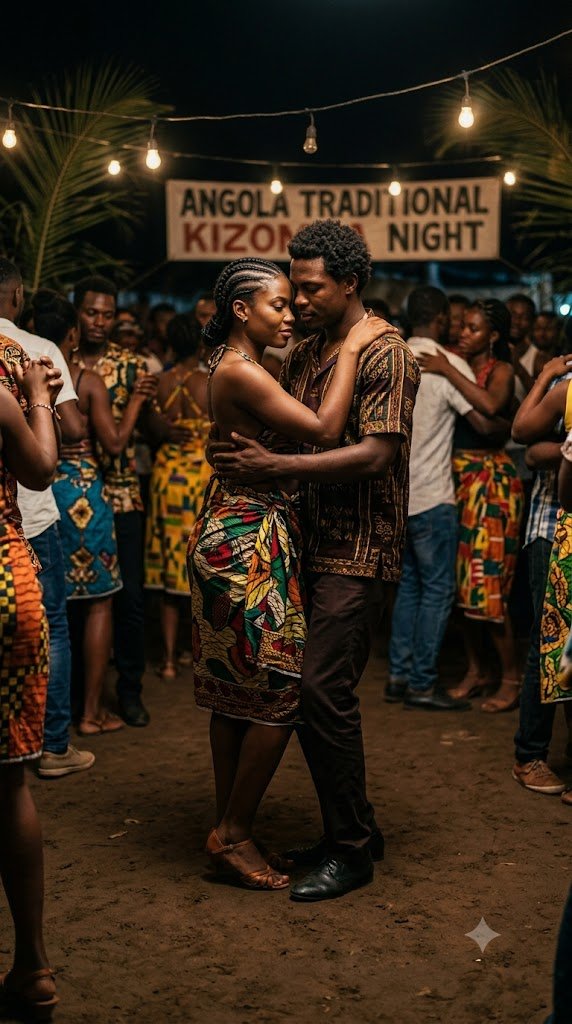
1. Kizomba Traditional (Passada)
- The Vibe: Grounded, cultural, and deeply connected.
- This is the authentic roots dance originating from Angola in the late 1970s and 1980s. It focuses heavily on a close, chest-to-chest embrace and smooth, walking steps (passada). There are no exaggerated tricks or dips; instead, the beauty lies in the subtle play of weight transfers, deception steps (virgulas), and a deep connection to the traditional rhythm driven by a heavy bassline.
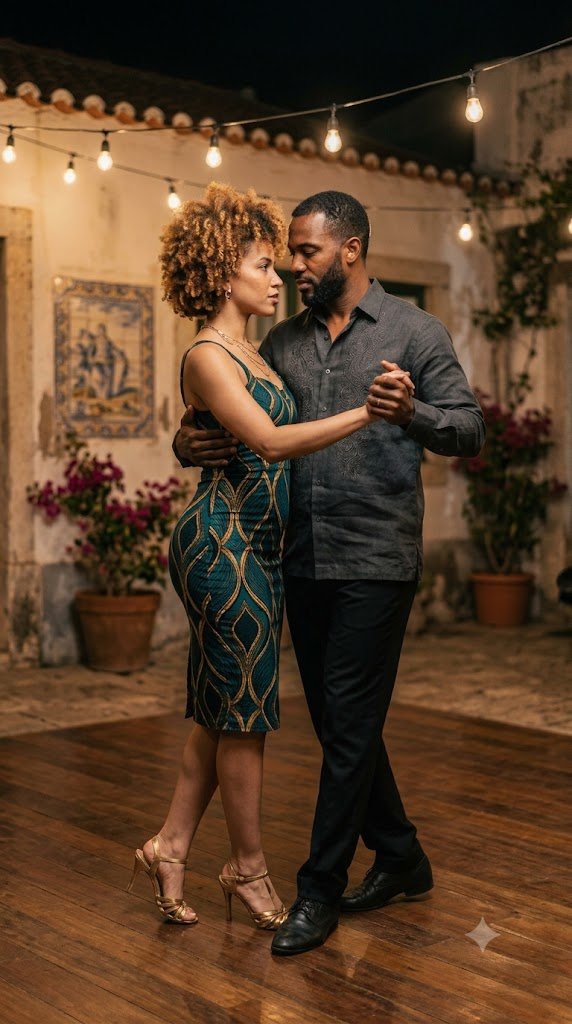
2. Urban Kiz
- The Roots: Developed in Europe (predominantly France) around the early 2010s, influenced by Ghetto Zouk, R&B, hip-hop, and electronic music.
- The Vibe: Linear, sharp, and highly technical.
- Unique Description: Unlike its circular, grounded Angolan predecessor, Urban Kiz is danced on a strict linear track with a higher, more upright posture. It utilizes an intense, high-stakes tension between partners to execute rapid footwork syncopations, sudden pauses, sharp direction changes, and intricate leg tangles (lollipops and sweeps), making it look futuristic and highly choreographed even when entirely improvised.
3. Kizomba Sensual / Tarraxinha
- The Roots: Tarraxinha (meaning “little screw”) is a sub-genre of music and movement from Angola that has been integrated into broader modern social dancing.
- The Vibe: Hypnotic, intimate, and percussive.
- Unique Description: This style minimizes footwork and traveling to focus almost entirely on isolation and body waves. The connection is exceptionally close, with the movement driven by precise, rhythmic isolations of the hips and pelvic area to match the heavy, slow beats of the music. It feels less like walking and more like a physical dialogue of slow-motion waves and sudden locks.
4. Douceur
- The Roots: A relatively modern evolution within the Urban Kiz and Ghetto Zouk scene, heavily popularized in Europe.
- The Vibe: Ethereal, ultra-smooth, and melting.
- Unique Description: Douceur translates to “sweetness” or “softness.” This style strips the aggressive, sharp edges away from Urban Kiz. It is characterized by ultra-slow-motion movements, continuous weight shifts that feel like “floating,” and an emphasis on lyrical interpretation. Dancers move so fluidly that the transitions between steps become completely invisible, creating a dreamlike, meditative state for the partnership.
Click below to check out the page:
https://mihirs.mtinstitute.in/