

About Latin Dance
Latin dance is a lively and expressive way of moving that comes from Spain and Latin America. It combines rhythm, culture, and emotion. Salsa, bachata, cha-cha, rumba, samba, and paso doble are all popular styles, and each has its own speed and style. Latin dance is all about musicality and coordination. It has fluid hip movements, sharp footwork, and a strong connection with your partner. People often dance to upbeat music like salsa and Latin pop, which makes it fun and exciting. It shows passion, romance, and storytelling in addition to being fun. Latin dance has become popular all over the world, thanks to social events, clubs, and competitions. It also has benefits like better fitness, confidence, and social skills, which make it a fun and rewarding thing for people of all ages to do.
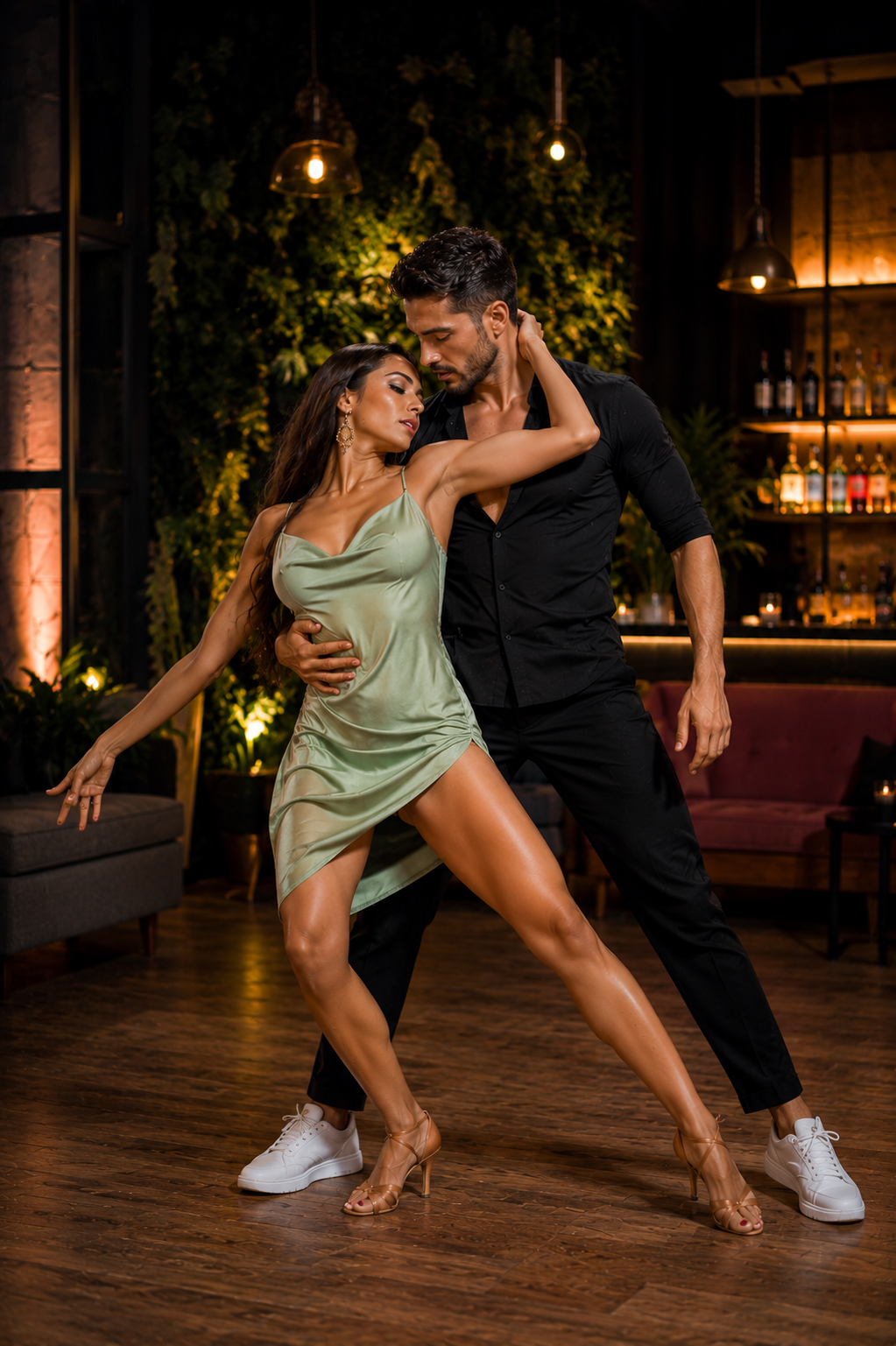
Types of Latin Dance
Salsa: Salsa is a fast-paced, energetic partner dance that originated in the Caribbean, particularly in Cuba, and later developed in places like New York. It is danced to lively salsa music with a strong beat, typically counted in 8 steps with a pause. Salsa emphasizes quick footwork, spins, and dynamic turns, along with a strong lead-and-follow connection between partners. There are different styles, such as LA style (on1), New York style (on2), and Cuban style, each with its own flavor. Salsa is social, vibrant, and often danced in clubs and festivals worldwide, making it one of the most popular Latin dances globally.
Bachata: Bachata originated in the Dominican Republic and is known for its romantic and sensual nature. It is slower than salsa and focuses on smooth, side-to-side steps with a signature hip movement on the fourth beat (tap). Bachata music is melodic and emotional, often centered around themes of love and heartbreak. The dance allows for close partner connection, body waves, and expressive styling. Modern variations like sensual bachata incorporate fluid movements and dips, making it visually appealing and intimate. It’s beginner-friendly and widely enjoyed in both social dancing and performances.
Kizomba: Kizomba originated in Angola and is characterized by its slow, smooth, and grounded movements. Unlike salsa and bachata, kizomba focuses more on subtle footwork, body control, and a close embrace between partners. The dance is deeply connected to its music, which has a soft, rhythmic, and almost hypnotic beat. Kizomba emphasizes connection, balance, and flow rather than flashy moves. It is often described as elegant and intimate, requiring strong communication between partners. Over time, styles like urban kiz have evolved, adding modern elements and sharper movements.